Slow travel concierge / Cozy Quest Finder
An AI-assisted slow travel concept that helps users find weekend places based on mood, needs, constraints, and travel context, then explains why selected places match.
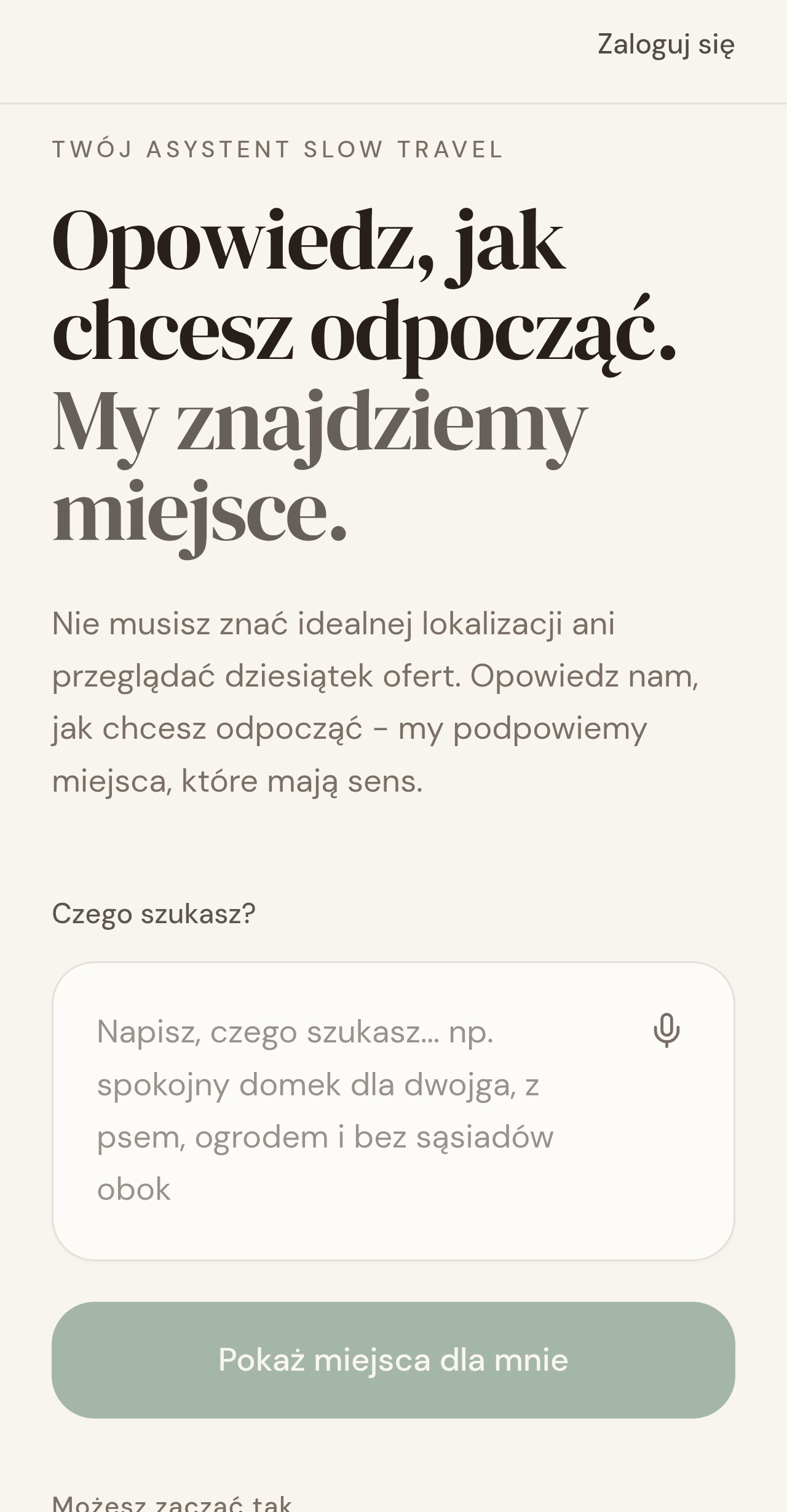
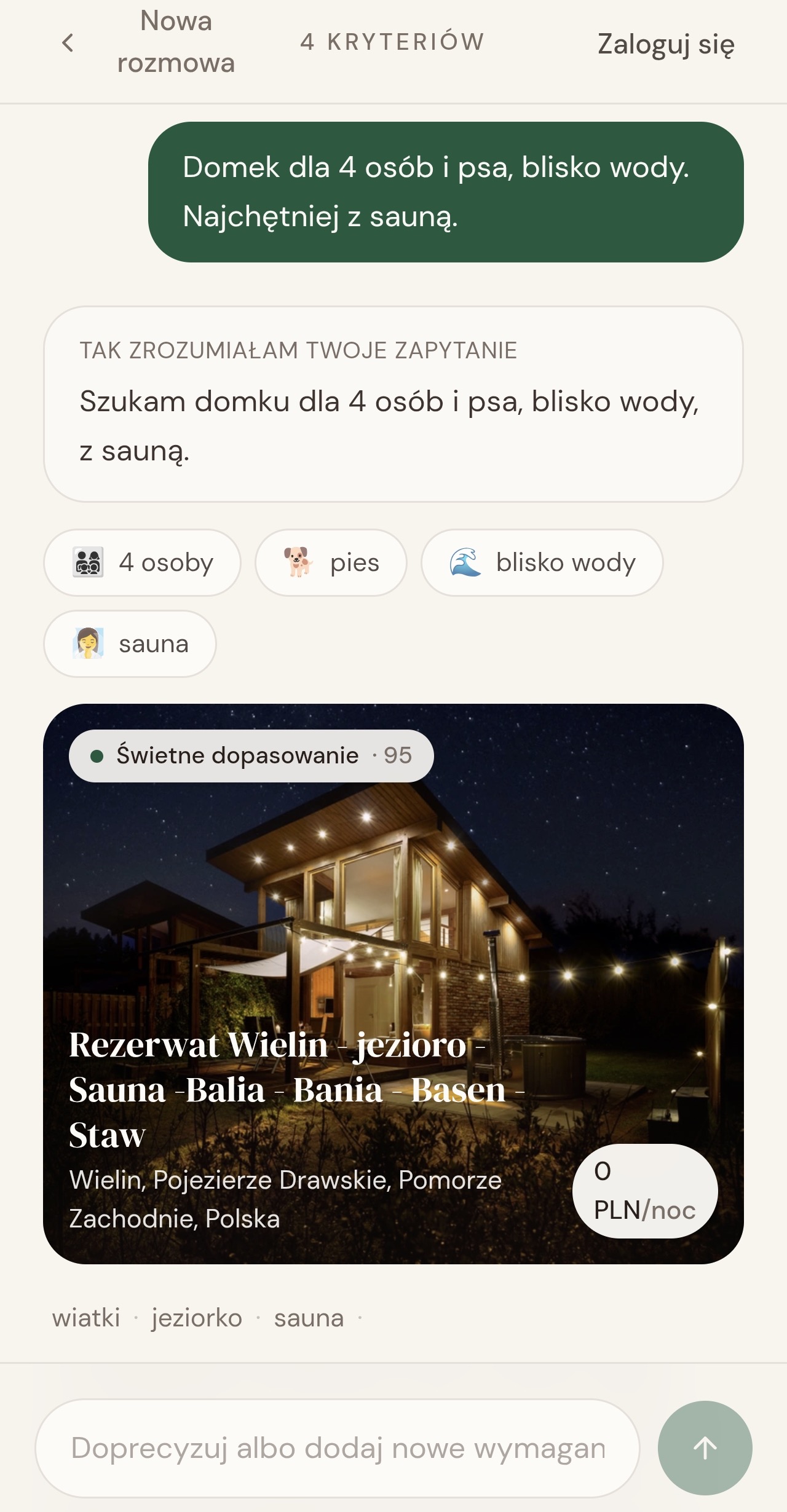
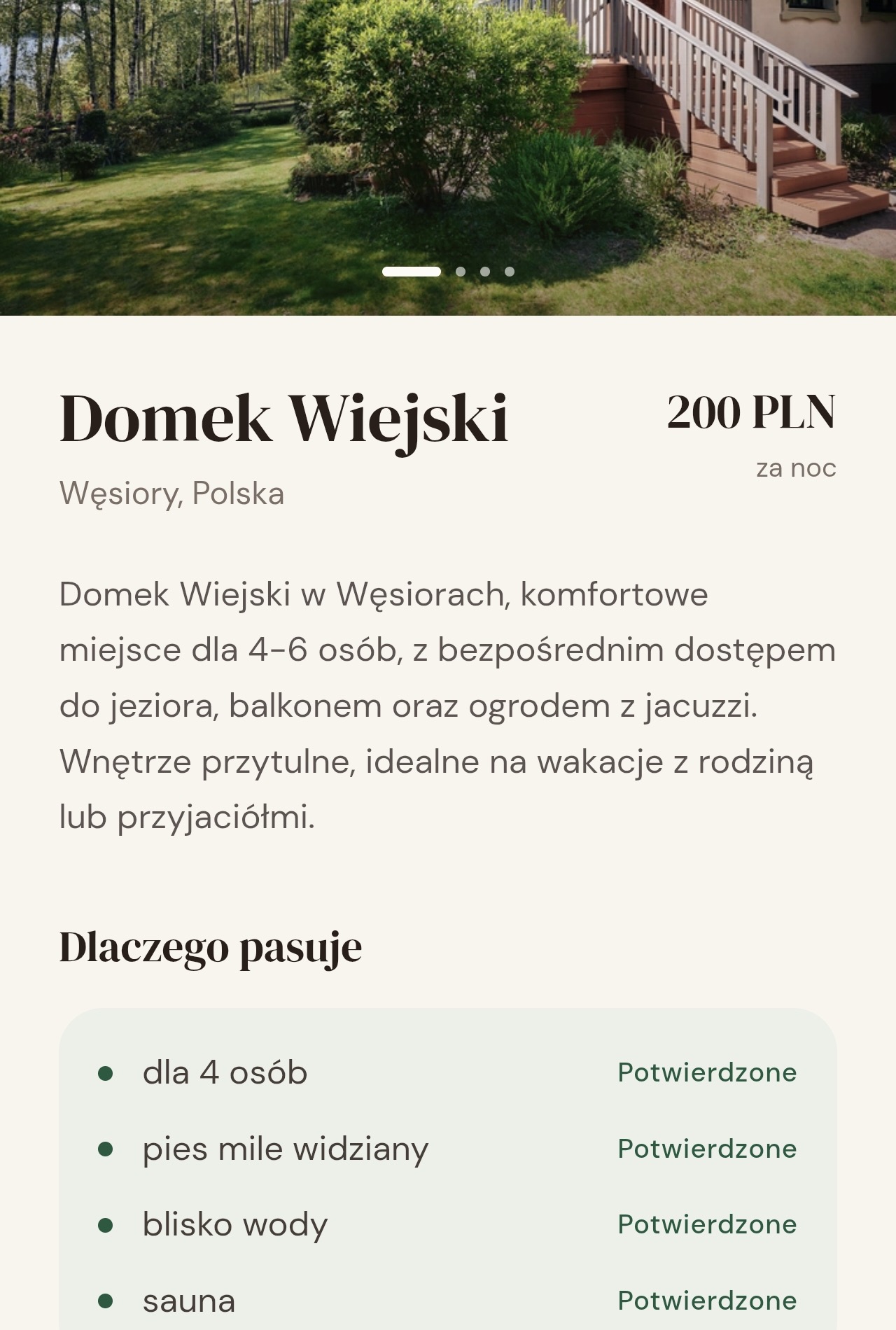
Three moments from the mobile-first demo: describe the trip, see interpreted criteria, and understand why a place matches.
Context
Problem
My role
Key challenges
- Translating vague needs like calm, cozy, private, or away from crowds into product criteria
- Balancing conversation with visible control over extracted criteria
- Designing trustworthy explanations for why a place is recommended
- Communicating uncertainty when details such as fencing, dog rules, internet quality, or distance from neighbors cannot be confirmed
- Reducing decision fatigue instead of adding another complex search surface
Process
What I worked on
Conversational discovery
A natural-language entry point for users who cannot easily express their travel needs through standard filters.
Recommendation logic
A structure for turning open-ended requests into must-have criteria, nice-to-have preferences, emotional needs, and constraints.
Explainability and trust
Match explanations that show why a place was recommended and which details are confirmed or still uncertain.
Saved intent
Saved places and searches that preserve the user’s travel idea, not only individual listings.
Key design decisions
People often start with a feeling or context, not a neat set of filters.
Make the first interaction an open text prompt instead of a filter-heavy form.
This lowers the effort of starting and lets the product capture nuance before structuring it.
AI recommendations can feel arbitrary if the logic is hidden.
Show extracted criteria and add a short explanation of why each place matches.
The user can see what the assistant understood and decide whether the recommendation is credible.
Travel listings often leave important details ambiguous or unconfirmed.
Design the assistant to name uncertainty instead of overclaiming certainty.
Honest limitation handling protects trust, especially for needs like dogs, privacy, fencing, or remote-work setup.
Solution
Visual evidence
Starting from intent, not filters
The prototype opens with a calm prompt that lets the user describe the kind of rest they want before the product asks them to translate it into filters.
Turning natural language into visible criteria
The assistant reflects the user’s request back as criteria, then uses those criteria to frame the shortlist and make the recommendation feel traceable.
Explaining why a place fits
The place detail view connects the listing to the original need, showing which requirements are confirmed and where the user may still need to check details.
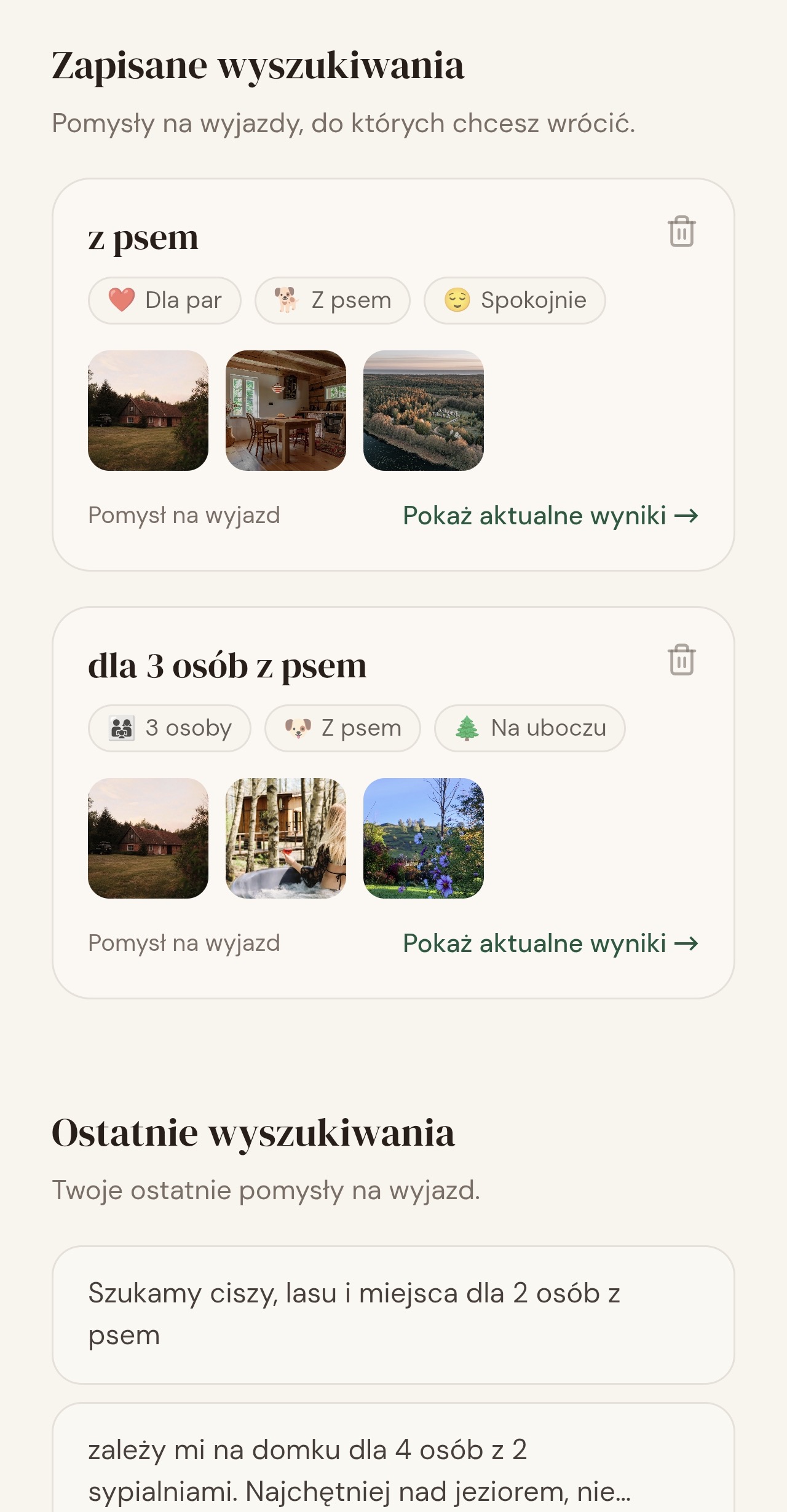
Saving the travel idea, not only a listing
Saved searches preserve the user’s intent and criteria, so they can return to a travel idea and refresh results later.
What this project demonstrates
- AI-assisted recommendation experience
- user needs interpretation
- conversational product flow
- product discovery
- early-stage prototyping
- service thinking
- travel domain understanding
Reflection
Ask the assistant about this project
Hi, I'm Patrycja's AI portfolio assistant. I can help you explore her experience, projects, AI work, UX writing skills, and potential fit for your role or team. You can ask a specific question or paste a job description for a role-fit check.
Please do not paste confidential or sensitive personal information. This assistant sends your question to Google Gemini API free tier and answers from Patrycja's approved portfolio knowledge base. Some details may still need to be confirmed directly with her.