ESL Brains AI Assistant
An AI-assisted homework concept for ESL Brains, exploring how teachers could generate, review, and send tailored assignments while students receive a simple guided homework experience.
Teacher prototype
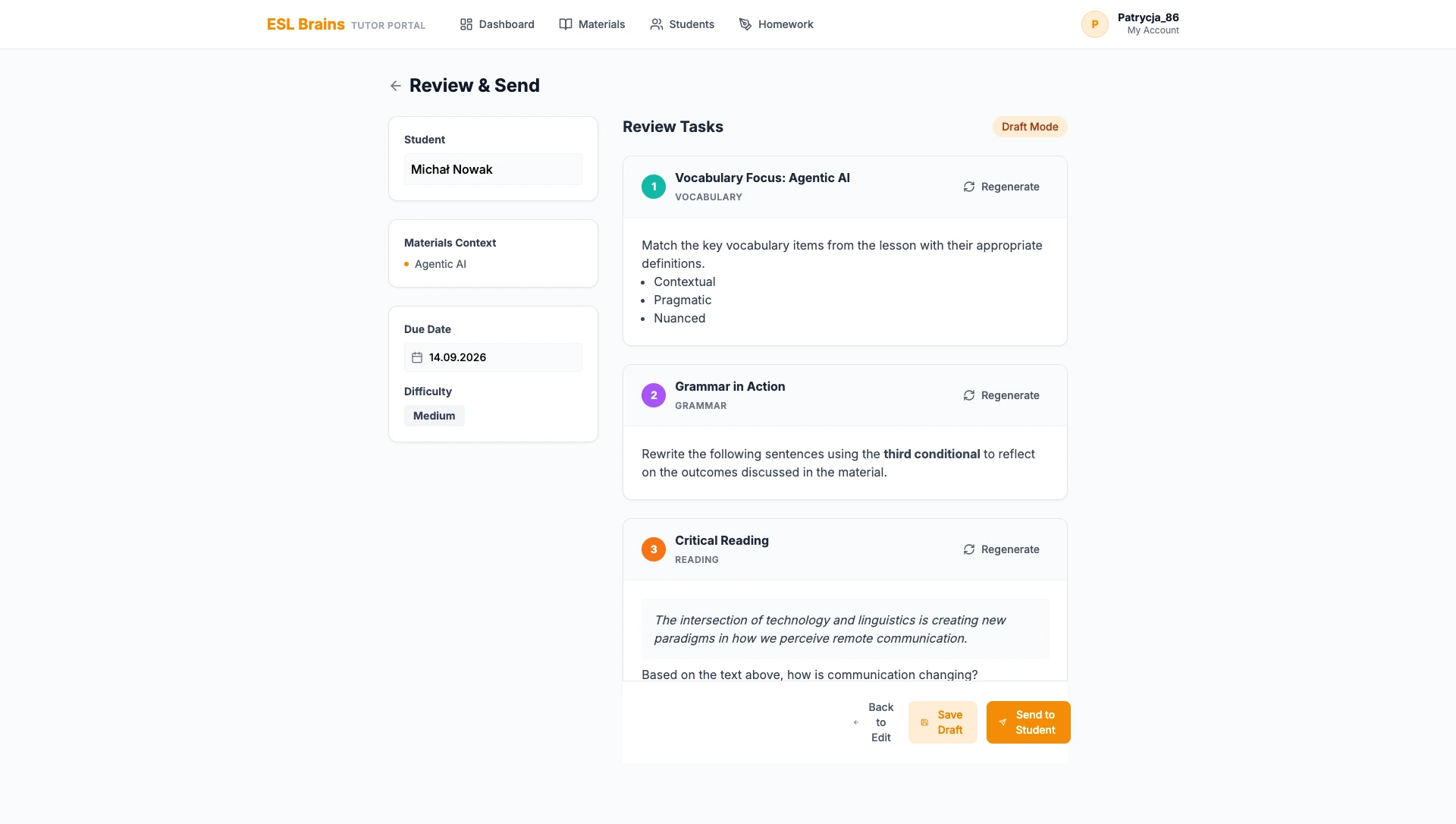
Teacher-facing flow for generating, reviewing, and sending homework.
Student prototype
Student-facing homework flow.
Context
Problem
My role
Key challenges
- Designing for two user groups with different needs: teachers need speed, control, and confidence; students need clarity and low-friction practice
- Keeping generated tasks aligned with lesson context, level, difficulty, and teacher intent
- Making AI outputs reviewable instead of presenting them as automatically correct
- Designing a flow that feels useful even when the AI needs constraints or regeneration
Process
What I worked on
Teacher workflow
A flow for selecting a student, choosing lesson material, setting difficulty and due date, adding instructions, generating tasks, reviewing, saving, and sending.
Human oversight
A review-before-send model where AI output stays editable and regenerable instead of becoming an invisible automated decision.
Student experience
A learner-facing experience focused on receiving homework, understanding status, starting tasks, seeing progress, and reviewing completed work without exposing unnecessary AI complexity.
Assistant behavior
Rules and interaction patterns for keeping generated homework aligned with lesson context, language level, and teacher instructions.
Key design decisions
Teachers need speed, but not at the cost of control.
Put the generated homework into a review state before sending it to the student.
This keeps the teacher responsible for quality and makes AI feel like support rather than replacement.
Generic generated tasks can ignore lesson goals or student level.
Let teachers provide material context, student selection, difficulty, due date, and additional instructions before generation.
The assistant has enough constraints to produce more relevant homework, and the teacher can shape the output without writing everything from scratch.
Students should not need to understand the AI workflow.
Separate the teacher-generation flow from the student-completion flow.
Each side gets an interface shaped around its own job: preparation and review for teachers, clear practice and progress for students.
Solution
Visual evidence
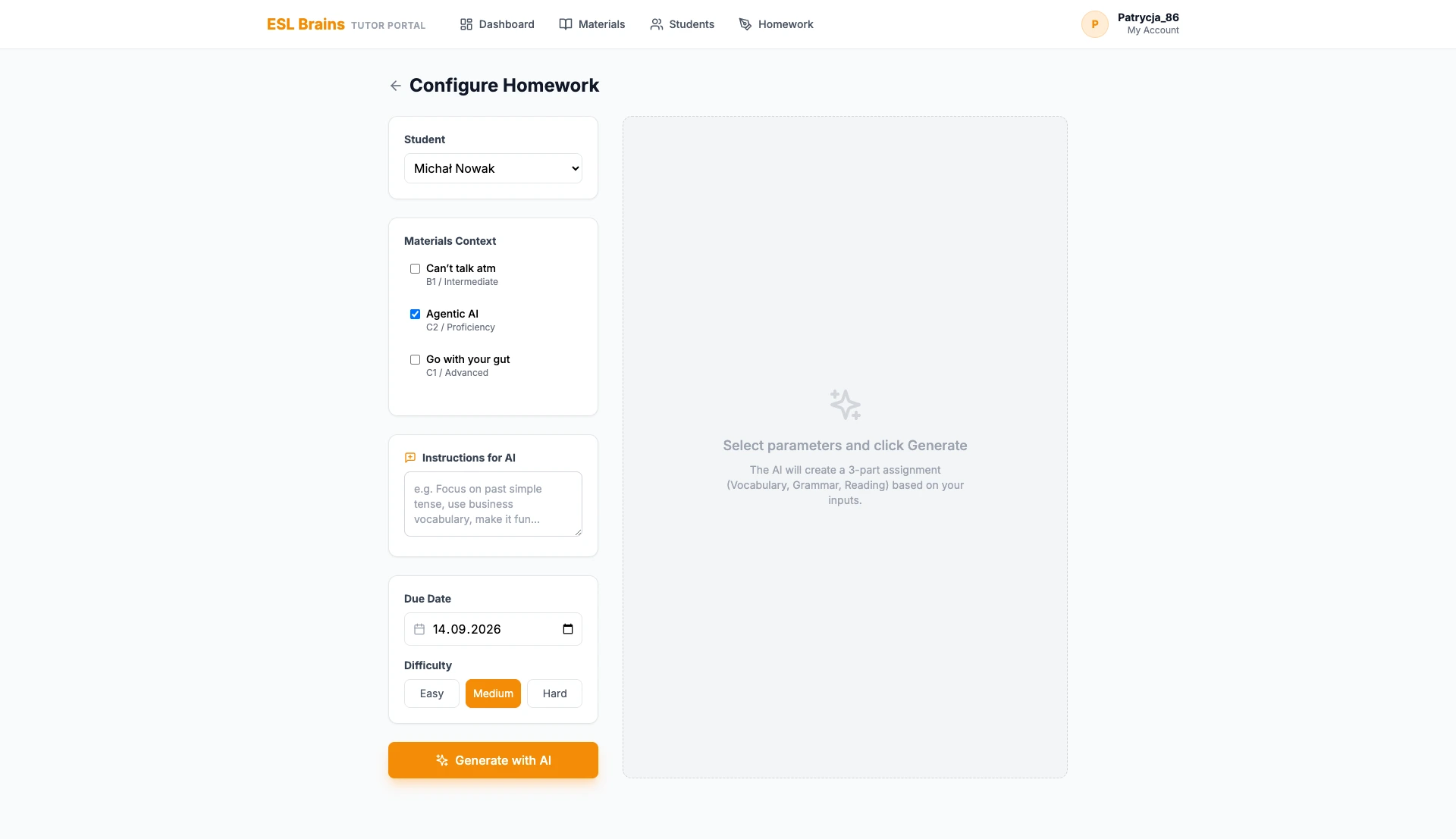
Teacher setup before generation
The teacher gives the assistant enough context to make the output more useful: student, lesson material, difficulty, due date, and custom instructions.
Review before sending
Generated tasks are not treated as final. The teacher can review, regenerate, save a draft, or send the homework after checking it.
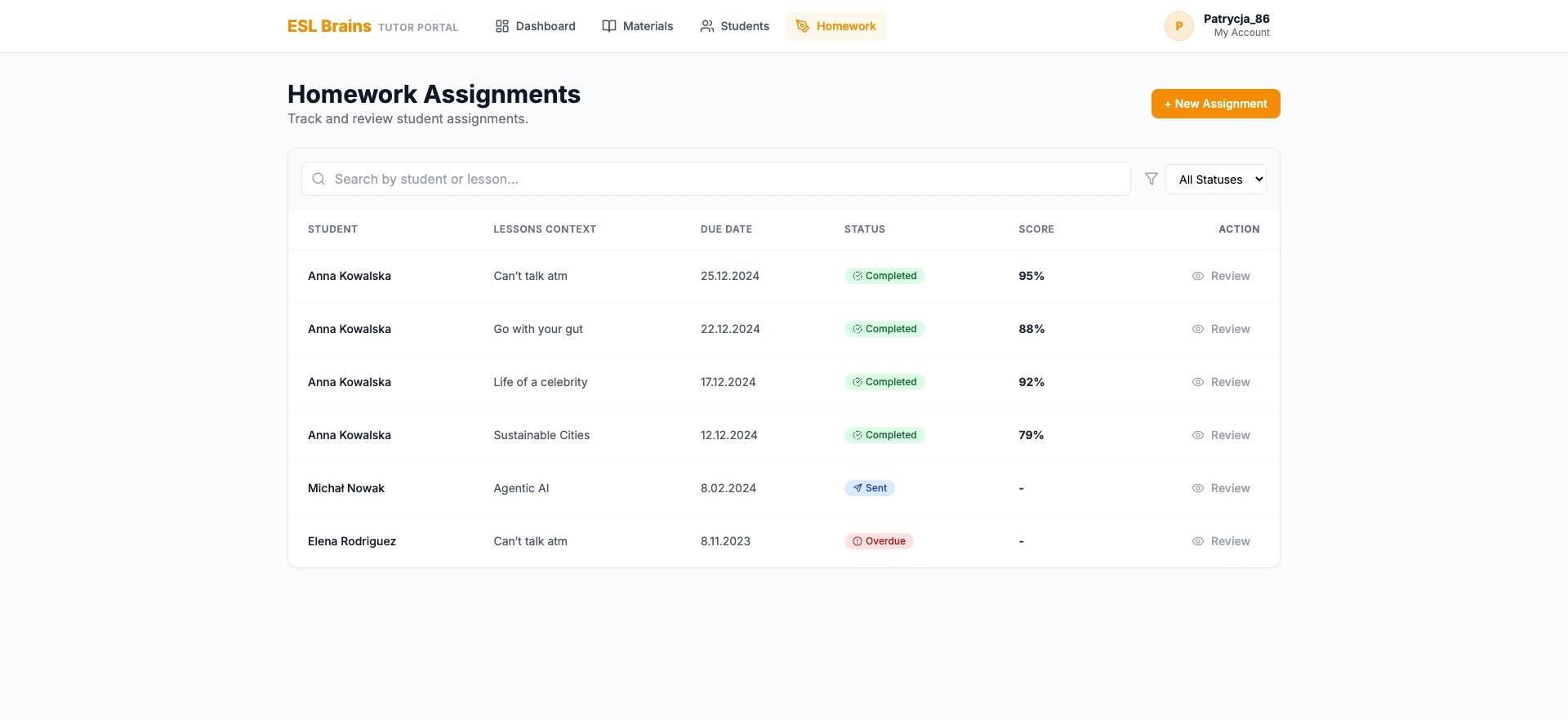
Homework tracking
The broader workflow includes assignment status, due dates, scores, and review actions so teachers can follow what happened after sending.
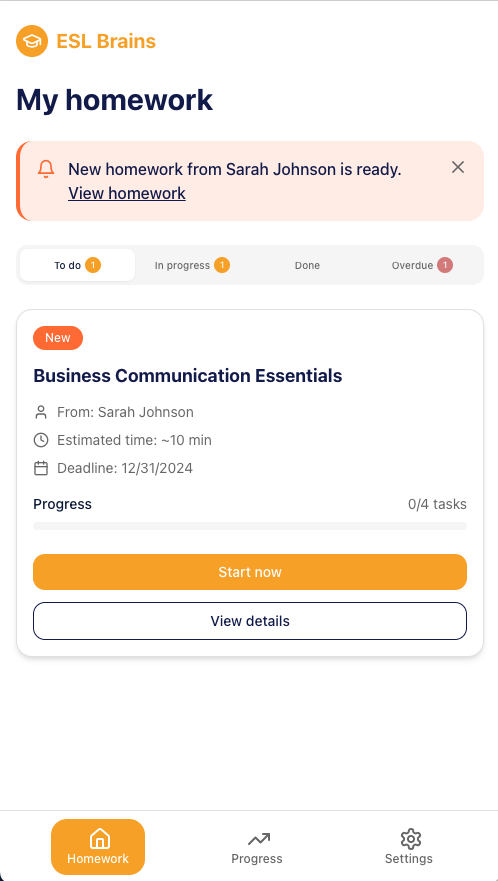
Student side: receiving homework
The student-facing flow turns the teacher's generated assignment into a simple task list with status, estimated time, deadline, progress, and a clear start action.
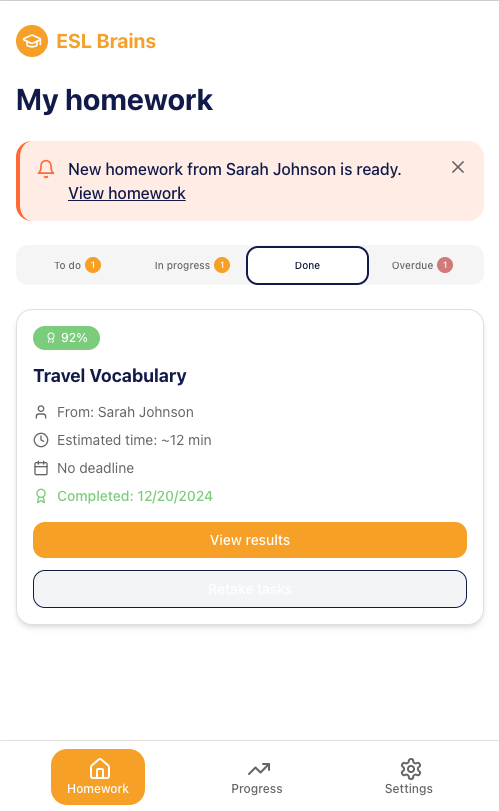
Student side: completion and feedback
After completion, the interface shows status, score, and the next meaningful action without exposing the complexity of the teacher's generation workflow.
What this project demonstrates
- assistant behavior design
- AI-supported learning experience
- two-sided product thinking
- user flow design
- prompt and interaction logic
- prototyping
Reflection
Ask the assistant about this project
Hi, I'm Patrycja's AI portfolio assistant. I can help you explore her experience, projects, AI work, UX writing skills, and potential fit for your role or team. You can ask a specific question or paste a job description for a role-fit check.
Please do not paste confidential or sensitive personal information. This assistant sends your question to Google Gemini API free tier and answers from Patrycja's approved portfolio knowledge base. Some details may still need to be confirmed directly with her.